


Miami Employment Class and Collective Action Lawyer





A payroll problem affecting one employee may be an error. When the same problem shows up on paychecks across a department, job classification, or entire Miami workplace, it may point to a broader pay practice that affects multiple employees. Federal and Florida wage laws may allow employees affected by the same practice to pursue their claims together through a collective or class action.
Miami employment class and collective action attorneys Jason D. Berkowitz and Anisley Tarragona are the founding partners of BT Law Group, PLLC. They represent employees in federal and state employment disputes, including claims involving unpaid overtime, minimum wage violations, misclassification, and other wage and hour issues.
This page explains how class and collective actions work, who may join, common wage violations, filing deadlines, arbitration issues, retaliation protections, and potential compensation.
If the same pay practice is affecting you and your coworkers, BT Law Group, PLLC can review your pay records and determine what options may be available. Call (305) 507-8506 to discuss your claim.
Find Out If You Have a Case
Complete Our Confidential Form
Our Results
$500,000
Disability discrimination under the Americans with Disabilities Act and Florida Civil Rights Act.
$400,000
Retaliatory discharge under the Florida Private Whistleblower Act and Florida Civil Rights Act.
$329,000
Unpaid overtime and retaliatory discharge under the Fair Labor Standards Act.
$285,899
Breach of an employment agreement, unpaid overtime, and retaliation under the Fair Labor Standards Act.

What Is the Difference Between a Class Action and a Collective Action?
The main difference between a class action and a collective action is how employees become part of the case. Fair Labor Standards Act (FLSA) collective actions require employees to opt in by filing written consent with the court, while class actions include members of a certified class unless they opt out. Florida wage claims can proceed as class actions under Florida Rule of Civil Procedure 1.220 in state court or Federal Rule of Civil Procedure 23 in federal court.
The procedures also have different requirements for bringing employees together in one case. Those differences affect how the court evaluates the group, how employees receive notice, and who is ultimately bound by the outcome.
FLSA Collective Actions Under 29 U.S.C. § 216(b)
An FLSA collective action allows one or more employees to pursue wage claims with other employees who are “similarly situated.” Under 29 U.S.C. § 216(b), each employee must file written consent with the court to become a party plaintiff. Employees who do not opt in remain outside the collective action, and their individual FLSA deadlines continue to run.
Class Actions for Florida Wage Claims
Florida wage claims can proceed on a class basis when the applicable certification requirements are satisfied. Florida Rule of Civil Procedure 1.220 governs class certification in Florida state court, while Federal Rule of Civil Procedure 23 applies in federal court, including when the class claims arise under Florida law.
In an opt-out damages class, employees who fall within the certified class remain part of the case unless they take the required steps to exclude themselves.
| Feature | FLSA Collective Action | Florida Class Action |
|---|---|---|
| How employees join | Opt in by filing written consent | Included in a certified class unless they opt out |
| Governing authority | 29 U.S.C. § 216(b) | Fla. R. Civ. P. 1.220 in state court; Fed. R. Civ. P. 23 in federal court |
| Typical claims | Unpaid overtime, off-the-clock work, minimum wage | Florida minimum wage and other state law wage claims |
| Court review | Review of whether employees are similarly situated | Class certification under the applicable rule |
| Effect on non-participants | Employees who do not opt in are not party plaintiffs | Class members are bound by the judgment unless they opt out |
Key Takeaway: FLSA collective actions require employees to affirmatively join, while opt-out class actions include employees who fall within the certified class unless they exclude themselves. The rule governing a Florida class action depends on whether the case is in state or federal court.
Choosing the correct procedure can affect how employees participate in a wage claim and which deadlines apply. Call BT Law Group, PLLC at (305) 507-8506 to discuss your situation and the options available.
What Our Clients Say
I can’t speak highly enough of my experience with Anisley and team at BT Law Group. I was in a very vulnerable position being laid off from my corporate job of 10 years at 8 months pregnant. The team asked all of the right questions with a very…

Katharine S.
From start to finish, they were incredibly skilled, knowledgeable, compassionate and supportive. Their expertise gave me confidence at every stage, and their dedication could be seen throughout the entire case. They explained every step in clear terms…

Sammy E.
Now that my case has been finalized, I would like to take this opportunity to publicly express my sincere admiration and gratitude to Anisley Tarragona and Jason Berkowitz for their outstanding professionalism and superb legal expertise applied…

Hiram V.
I recently found myself in the midst of an employment and labor dispute crisis, desperately seeking legal assistance to navigate the complexities of the situation. After screening multiple firms, I was fortunate to discover BT Law Group…

Marc O.
I was very pleased with my experience with BT Law group. Both Jason and Anisley were professional and answered all my questions. They believed in me and my case and for that I am forever grateful. Jason fought for me and justice was served. I recommend…

Allycia C.
Do You Qualify to Join a Wage and Hour Collective Action in Miami?
To join an FLSA collective action, you must fall within the group covered by the case and meet the requirements for participation, including filing written consent with the court by the applicable deadline. The court looks at whether participating employees are similarly situated based on the pay practice at issue and the circumstances relevant to their claims.
Employees can be similarly situated when they share a job classification, timekeeping or rounding policy, salary practice, or method for calculating the regular rate. Working at different locations, on different shifts, or for different numbers of hours does not automatically prevent employees from participating together when they were subject to the same challenged pay practice.
Eligibility also depends on whether the wage claim falls within the protections of the Fair Labor Standards Act (FLSA) and whether an exemption applies. In an overtime case, this includes determining whether the employee is entitled to overtime pay under the FLSA based on the employee’s duties, compensation, and other relevant circumstances.
What Wage and Hour Violations Lead to Class Claims in Florida?
Class and collective wage claims often involve a pay practice that affects employees across the same job classification, department, or company. A common payroll rule, timekeeping practice, or scheduling policy can support a group claim when it causes multiple employees to be underpaid in a similar way.
Unpaid Overtime Under a Common Pay Policy
Overtime claims under 29 U.S.C. § 207 can arise when an employer uses the same method to calculate overtime for a group of employees. This can include excluding nondiscretionary bonuses, shift premiums, or commissions from the regular rate used to calculate overtime pay. Uniform rounding rules, automatic meal deductions, and required pre-shift or post-shift work can also affect multiple employees under the same pay practice.
Minimum Wage and Uniform Pay Deduction Violations
Florida’s minimum wage is established by Article X, Section 24 of the Florida Constitution and enforced through Florida Statutes § 448.110. Group claims can arise when, for example, uniform deductions, unpaid training time, or tip and service charge practices reduce employees’ pay below the required minimum wage. A deduction from a final paycheck can also raise a minimum wage issue when it reduces an employee’s compensation below the applicable rate.
Key Takeaway: Class and collective wage claims are stronger candidates for group treatment when employees were affected by the same pay practice, rather than separate disputes based on individual circumstances.
BT Law Group, PLLC can evaluate your records and determine whether your claim is suited for class or collective treatment. Call (305) 507-8506 to discuss your legal options.
Connect With Our Team Now
Thorough Case Evaluation – 100% Confidential
How Does the FLSA Opt-In Process Work?
The FLSA opt-in process begins after a collective action is filed and the court determines that notice can be sent to other employees. The notice explains the case and allows eligible employees to join by filing written consent with the court. Employees who do not opt in are not part of the collective action.
Conditional Certification and Notice
Federal courts in Florida commonly use a two-step approach to determine whether employees are similarly situated. At the first stage, the court reviews whether there is sufficient support for sending notice to other employees who were subject to the challenged pay practice. After discovery, the court takes a closer look at the employees’ circumstances and can allow the collective action to continue or decertify the group if they are not similarly situated.
Deadlines to Opt In After Notice Is Sent
The court-approved notice sets the deadline for employees to opt in, but the FLSA limitations period continues to run for each employee until written consent is filed. Missing the opt-in deadline can prevent an employee from joining that collective action, while waiting to file consent can also reduce the period for which unpaid wages can be recovered.
What Compensation Can You Recover in a Class or Collective Action?
Compensation in a wage case starts with the wages the employee should have received. For overtime claims, this can include unpaid amounts needed to satisfy the required overtime rate for hours worked over 40 in a workweek, after accounting for wages already paid. For minimum wage claims, recovery can include the difference between the employee’s actual pay and the applicable minimum wage.
Liquidated Damages
Under the FLSA, an employee can recover liquidated damages equal to the unpaid minimum wages or overtime owed. A court can reduce or deny liquidated damages if the employer proves that it acted in good faith and had reasonable grounds for believing its conduct complied with the FLSA. Florida’s Minimum Wage Act also provides an equal amount of liquidated damages for a prevailing employee, subject to its good faith provision.
Attorney’s Fees and Costs
The FLSA requires an award of reasonable attorney’s fees and costs to a prevailing employee. Florida’s Minimum Wage Act also provides attorney’s fees and costs to an employee who prevails, while Florida Statutes § 448.08 separately permits a court to award fees and costs to the prevailing party in certain unpaid wage actions.
The compensation available depends on the type of wage violation, the amount of unpaid wages, and the law governing the claim. Call BT Law Group, PLLC at (305) 507-8506 to discuss the compensation available in your case and the steps for pursuing it.
Employment Class and Collective Action Attorneys in Miami - BT Law Group, PLLC
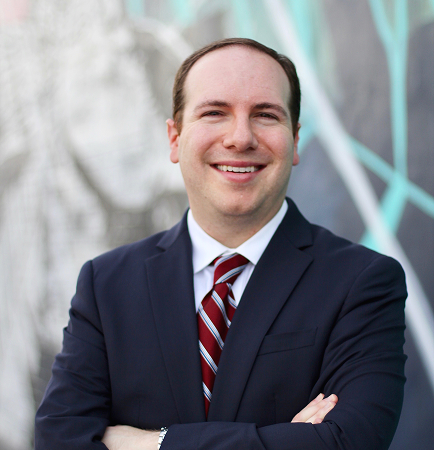
Jason D. Berkowitz, Esq.
Jason D. Berkowitz is a founding partner of BT Law Group, PLLC and a Miami labor and employment attorney who represents employees in wage and hour disputes and other workplace claims. Before founding the firm, he was a partner at a national labor and employment firm representing management, including Fortune 100 companies.
Mr. Berkowitz litigates cases in federal and state courts, before administrative agencies, and in arbitration proceedings. He earned his J.D. cum laude from the University of Miami School of Law and is admitted to all three U.S. District Courts in Florida and the U.S. Court of Appeals for the Eleventh Circuit.

Anisley Tarragona, Esq.
Founding partner Anisley Tarragona focuses her practice on protecting employees in disputes involving unpaid wages, misclassification, discrimination, harassment, retaliation, and wrongful termination. She handles employment litigation in federal and state courts as well as proceedings before administrative agencies and arbitration tribunals.
A graduate of the University of Miami School of Law, Ms. Tarragona is admitted to practice in Florida, all three federal district courts in the state, and the U.S. Court of Appeals for the Eleventh Circuit. Born and raised in Cuba, she is fluent in Spanish and represents both English and Spanish speaking employees.
What Is Required to Certify a Class Action in Florida State Court?
To certify a class action in Florida state court, the proposed class must satisfy the requirements of Florida Rule of Civil Procedure 1.220(a): numerosity, commonality, typicality, and adequacy.
The class must also qualify under one of the categories in Rule 1.220(b). For a damages class under Rule 1.220(b)(3), common questions must predominate over individual issues, and a class action must be superior to other available methods of resolving the dispute.
In a wage case, these requirements often depend on how broadly the employer’s pay policy affected the proposed class.
- Numerosity considers whether separate lawsuits would be impractical, while commonality focuses on shared questions of law or fact, such as whether a single payroll practice violated Florida wage law.
- Typicality examines whether the named employee’s claim reflects the claims of the class.
- Adequacy considers whether the representative and class counsel can fairly protect the group’s interests.
- Certification addresses whether the claims are appropriate for class treatment, not whether the employer ultimately violated the law.
A court can certify a class and later rule for the employer, or deny certification without preventing employees from pursuing individual claims.
Can Your Employer Require Arbitration Instead of a Class Action?
Yes, in some circumstances. The Federal Arbitration Act requires courts to enforce covered written arbitration agreements according to their terms, subject to applicable contract defenses and statutory exceptions. Employment agreements can also contain class or collective action waivers, so in Florida, an enforceable agreement requiring individual arbitration can prevent an employee from pursuing a wage claim through a class or collective proceeding.
Whether an arbitration agreement is enforceable in Florida depends on its language and the circumstances surrounding the agreement. Courts can consider issues such as whether the employee received adequate notice, whether the agreement is supported by consideration, whether its terms are unconscionable, and whether the wage claim falls within its scope. Federal law also provides a specific exception for cases involving sexual assault or sexual harassment disputes, but a stand-alone wage dispute does not trigger that exception.
An arbitration agreement does not automatically determine how every wage dispute must proceed, so its terms should be reviewed alongside the underlying claim. Call BT Law Group, PLLC at (305) 507-8506 to discuss how an arbitration agreement or class waiver could affect your case.
Learn More
Are You Protected From Retaliation for Joining a Wage Claim?
Yes. The FLSA’s anti-retaliation provision at 29 U.S.C. § 215(a)(3) prohibits an employer from firing or otherwise discriminating against an employee for filing a complaint, starting or participating in an FLSA proceeding, or testifying in one. This protection includes employees who file written consent to join an FLSA collective action.
Retaliation is not limited to termination and can include other adverse actions connected to an employee’s protected activity, such as:
- Schedule and hour changes, including reduced hours or removal from preferred shifts
- Pay or assignment changes, such as a pay cut, demotion, or transfer to less desirable work
- Discipline, including new write-ups or other disciplinary action
- Exclusion, such as losing access to training, overtime opportunities, or promotion consideration
- Pressure to withdraw, including requests to abandon or withdraw from the wage claim
A retaliation claim is separate from the underlying wage dispute, so the outcome of the wage claim does not necessarily determine whether unlawful retaliation occurred. Employees who experience changes after engaging in protected activity should keep a dated record of what happened and preserve relevant documents they are lawfully entitled to keep.
If your employer takes action against you after you raise a wage concern or join an FLSA case, BT Law Group, PLLC can evaluate whether the conduct supports a retaliation claim. Call (305) 507-8506 to discuss what happened and the legal options available.
What Deadlines Apply to Wage and Hour Claims in Florida?
The deadline for a wage and hour claim depends on the law governing the claim and whether the violation was willful. Federal and Florida wage claims have different limitations periods, and participation in an FLSA collective action has additional timing rules.
Federal FLSA Statute of Limitations
Under 29 U.S.C. § 255(a), an FLSA claim has a two-year statute of limitations, extended to three years for a willful violation. In a collective action, the limitations period continues to run for each employee until that employee files written consent to join. Because wage claims can accrue with each underpaid workweek, waiting to opt in can reduce the period for which unpaid wages are recoverable.
Florida Minimum Wage Claim Deadlines
A claim under Florida Statutes § 448.110 has a four-year limitations period, extended to five years for a willful violation. Before filing a claim for unpaid minimum wages, the employee must provide written notice to the employer identifying the minimum wage claimed, the relevant dates and hours worked, and the total amount of unpaid wages. The employer then has 15 calendar days to pay the amount claimed or otherwise resolve the dispute, and the limitations period is tolled during those 15 days.
Key Takeaway: Missing the applicable deadline can limit or bar recovery even when there is strong evidence of a wage violation.
Service Areas
BT Law Group, PLLC represents employees in employment class and collective actions throughout Miami, Miami-Dade County, and South Florida. Our team handles FLSA and Florida wage claims in federal and state courts, serving employees in Miami-Dade, Broward, and Palm Beach counties. Spanish language consultations are available.
Speak With a Miami Wage and Hour Class Action Attorney
When the same pay practice affects multiple employees, reviewing payroll records, time records, and workplace policies can help determine whether the issue supports a class or collective action. The attorneys at BT Law Group, PLLC evaluate these records and the applicable federal and Florida wage laws to determine the appropriate course of action.
Jason D. Berkowitz and Anisley Tarragona are the founding partners of BT Law Group, PLLC and focus their practice on employment law. They represent employees in wage and hour disputes and other workplace matters, including cases handled in federal and state courts and through arbitration.
Call BT Law Group, PLLC at (305) 507-8506 to schedule a confidential case evaluation. We represent employees throughout Miami-Dade County and South Florida.

Frequently Asked Questions About Employment Class and Collective Actions in Miami
Can I join a collective action if I already signed an arbitration agreement?
Yes, in some circumstances. An enforceable arbitration agreement in Florida that requires individual arbitration and includes a class or collective action waiver can prevent an employee from joining an FLSA collective action. The agreement’s language, scope, enforceability, and any applicable statutory exceptions must be reviewed before determining how the wage claim can proceed.
How many coworkers are needed to start a collective action?
The FLSA does not set a specific minimum number of employees for a collective action. The key issue is whether the employees are similarly situated with respect to the challenged pay practice. A Florida state court class action has a separate numerosity requirement under Rule 1.220, which considers whether the class is so numerous that joining each member individually would be impracticable.
Will my employer know I joined a wage collective action?
Yes. Joining an FLSA collective action requires filing written consent with the court, which identifies the employee as a participant in the case. Participation in the collective action is therefore not anonymous.
Can I be fired for joining a class or collective wage claim?
No. An employer cannot lawfully fire or otherwise retaliate against an employee because the employee engaged in activity protected by the FLSA. Under 29 U.S.C. § 215(a)(3), protected activity includes filing a complaint or participating in an FLSA proceeding. Termination, reduced hours, demotion, or other adverse action connected to protected activity can support a separate retaliation claim.
What is the difference between opting in and opting out?
Opting in requires an employee to take affirmative action to join a case, such as filing written consent in an FLSA collective action. In an opt-out class action, employees who fall within the certified class remain included unless they take the required steps to exclude themselves.
How long does a wage and hour class or collective action take in Florida?
There is no fixed timeline for a wage and hour class or collective action. The length of the case depends on factors such as certification proceedings, the number of employees involved, discovery, motions, settlement negotiations, and whether the case proceeds to trial. The expected timeline becomes clearer as the case develops.